As a counselor, I take on many different roles in people's lives. At different times I'm an educator, a listener, a sounding board, a confidante...the list goes on and on. But sometimes when I'm working with a couple, I find myself in the interesting role of being a translator. I'll give you an example from a couple I worked with, but of course I'll change the names and the circumstances. In the middle of a session where I was trying to teach Jane and John how to communicate when they were having a difference of opinion (we talked about taking time-outs, using "I" statements, re-stating what the other had just said), John got a phone call which he stepped out of the room to take. He spoke with the person on the phone for two minutes, and then re-joined the session. I could tell Jane was really frustrated with John, so I told them that this would be a great way to practice the skills we were just talking about. So I asked Jane to express her frustration to John.
What happened next was very interesting. I watched Jane and John argue about whether or not it was rude or appropriate for him to take a call during the session, and I realized that underneath the surface argument, there was a lot of emotional stuff going on that neither Jane nor John realized. With a little pause and reflection, Jane was able to realize what was going on emotionally for her, and why she had such a strong reaction to a small interruption. The argument wasn't really about whether or not it was rude to answer a phone call in the middle of a session. The argument was really about Jane feeling like John was not making her or their relationship a priority. Light-bulb moment for both of them!! As John struggled to find the right words to reassure Jane, what came out of his mouth actually sounded to Jane like he was throwing something from her past into her face. John was well-meaning, but in her raw emotional state, Jane heard the words but missed the emotional content behind them. Again, I was able to search for the emotional message behind John's misguided attempt to reassure Jane, and once Jane let down her wall of defensiveness and anger, she was able to see that John's words were meant to express love and commitment. I joked with them that I was their translator, but later I thought a lot about the words we say and how often they do not reflect accurately what we are feeling at the time.
I've mentioned before that anger is not a primary emotion. When we get angry, there is usually some underlying primary emotion such as fear or hurt. Unfortunately, most of the time we don't have a translator present to
help us to understand and restate what we are really feeling. The next time you feel angry with your spouse, pause and think about what the feeling is behind the anger. What are you really feeling? It's much easier to be angry than to be hurt. It's easier to tell someone that they are rude and inconsiderate than to tell them that you felt hurt and abandoned by their actions. But you can argue for hours about some surface issue that really has no meaning, and never get anywhere because the real issue (the emotional content) is not apparent to either of you. Instead of wasting time arguing about answering the phone call (or leaving the toothpaste cap off, or doing the dishes, or spending time with friends, or whatever the surface issue is), take some time to figure out what is going on emotionally. Why are you really upset? Then instead of talking about the surface issue, talk about how you really feel. Talk about why you are feeling the way you are feeling. And then listen. Really listen. Not just to the words your spouse is saying, but listen for the emotional content behind those words. I hate to generalize, but men usually aren't the best at communicating feelings. It is really hard for a lot of men to talk about their feelings. So be prepared to be a translator. Figuring out and accurately expressing your own feelings, and then figuring out what your spouse is really trying to express can be challenging, but I think it can take your disagreements and your relationship to a whole new level of understanding. And that's a good thing!
Posted by Cherene
Sunday, March 24, 2013


Sunday, March 17, 2013
The Greatest Joy
"The joining together of a man and a woman to be legally and lawfully wed not only is preparation for future generations to inherit the earth, but it also brings the greatest joy and satisfaction that can be found in this mortal experience." ~ L. Tom Perry
Thursday, February 28, 2013
3 months later
I haven't posted anything in three months! I started working part-time as a counselor (just a few hours a week), and I am not doing much couples or marriage work, so my focus has been elsewhere. I would really like to get back to posting on a regular basis, because it definitely helps my marriage when I post because I am consciously thinking about the importance of marriage and how I can improve my marriage. So, to get back into the swing of things, I'm going to just keep it simple today and post some marriage advice that my sister-in-law shared with me:
"Don't nickel-and-dime chores. Don't strive for a relationship that
I love her quote, because I think we all get caught up in worrying about what's "fair" too often. When you are willing to sacrifice and serve your spouse, your love for them grows, and your marriage ends up being so much happier. When you are constantly keeping score, it is easy to feel like your spouse owes you, and you end up feeling bitter and resentful. Freely give, and you'll be happier!
Posted by Cherene
"Don't nickel-and-dime chores. Don't strive for a relationship that
is 50-50. Give 150%, strive to give everything you can."
I love her quote, because I think we all get caught up in worrying about what's "fair" too often. When you are willing to sacrifice and serve your spouse, your love for them grows, and your marriage ends up being so much happier. When you are constantly keeping score, it is easy to feel like your spouse owes you, and you end up feeling bitter and resentful. Freely give, and you'll be happier!
Posted by Cherene
Thursday, November 15, 2012
A Duet
I just love this cute quote by Bruce C. Hafen:
"In the little kingdom of a family, each spouse freely gives something the other does not have and without which neither can be complete and return to God's presence. Spouses are not a soloist with an accompanist, nor are they two solos. They are the interdependent parts of a duet, singing together in harmony at a level where no solo can go."
"In the little kingdom of a family, each spouse freely gives something the other does not have and without which neither can be complete and return to God's presence. Spouses are not a soloist with an accompanist, nor are they two solos. They are the interdependent parts of a duet, singing together in harmony at a level where no solo can go."
Friday, October 26, 2012
Marriage Counseling
Most people think of marriage counseling as kind of a last-ditch effort people make to save a failing marriage. If that's what you think, it's time to stop and re-think! :)
I'm going to share a story with you. A good friend of mine had a parent that was verbally and emotionally abusive to her while she was growing up. This friend is a wife and mom, and has a very ideal-looking life. Unfortunately, she is plagued with depression, anxiety, guilt, self-doubt, and a nagging sense that she will never be "good enough." Sadly, when a parent tells a child those messages over and over, the child grows up believing it. She has resisted going to counseling, insisting that she is fine, and that everyone has problems.
In the past, whenever I suggested that she try counseling, she would reply, "Why don't YOU try counseling?" So then, I started working on getting my master's in counseling, and my professors encouraged all of the students in the program to go to counseling on a regular basis. I began to realize that counseling is helpful to everyone in every situation. So I started going to counseling (and really loved the experience), and then I suggested again to my friend that she try going to counseling. This time, what could she say? So she went. This was about a year ago. Recently, she opened up to me about how counseling has affected her life. She said that counseling has probably saved her life, and has definitely improved her life immeasurably. She has learned so much about herself and how to come to terms with her past, and how to handle her future.
Then she told me about how she brought her husband along to a counseling session because she wanted her husband to meet her counselor. This friend has a great marriage. They get along well and rarely have conflicts. This friend would have never gone to marriage counseling because she didn't feel she needed it. But with a few key questions from the counselor, both my friend and her husband realized that they could benefit from learning some communication techniques, and from talking about how they feel. So they started attending some sessions together, and they could not believe how much they benefited from marriage counseling. They both gained a deeper appreciation for the other, and they learned about each others' communication styles. She discovered that when he said "X" he really meant "Y," and he discovered how to say "Y" when that is what he meant. They loved marriage counseling, and both felt that it helped their good marriage to be even better.
So, my message is #1: Counseling is great! It is not scary. Going does not mean that there is something wrong with you. We live in a crazy, busy, hectic world where we rarely take the time to think about our lives, our relationships, and our feelings. We rarely take the time to talk to someone else about our fears, our problems, and our real selves. Counseling helps us to sort out how we are feeling. Counseling helps us to learn coping skills to deal with life's craziness. In short, don't be afraid to go to counseling.
AND message #2: Marriage counseling is most helpful when the marriage is not in a crisis. Marriage counseling is much easier and more enjoyable when both parties are not at the end of their ropes! Marriage counseling can help a deeply troubled marriage, but it can also greatly help a good marriage.
(Posted by Cherene)
Thursday, October 25, 2012
Marriage Article - Is 15 daily things too many?
I've been invited to contribute to a new website FamilyHow.com and I'm excited to share my first article that has been published there.
15 daily things to do to strengthen your marriage
I mentioned the title of this article to a friend who said, "If I have to do 15 things a day for my marriage, I'm working too hard." Kidding aside, can we make a greater investment in one of our most important relationships?
The focus of the article is on the simple things we already do that can cultivate kind feelings for our spouse. It certainly isn't a complete list, and every couple is different, but I tried to include as many universal activities as I could. I always love to hear what you think & I hope you find it useful.
Posted by Tamara
Tuesday, October 9, 2012
Strangling Your Husband Is Not An Option - Book Review
Reading this book is like having a conversation with your big sister, who happens to have a fantastic sense of humor and a strong handle on marriage relationships. Her approach is bold, direct and refreshing. Especially in a world where there is little support for one of a woman's most fulfilling roles.
The Visual Aid:

Publisher: Deseret Book
Year: 2006
How I found it: Saw it on the shelf and laughed out loud!
Available on Amazon - Here
Audience: This book is written for women, specifically wives.
Paperback, 184 pages
Book Description:
"Things can get pretty crazy in marital relationships. As one reviewer has said, “What wife hasn’t felt like strangling her husband at least once during their marriage?” With her lighthearted personality and humor, author Merrilee Boyack shares twenty-five years’ worth of marital perspective in this practical guide to improve any marriage. As an estate-planning attorney, Merrilee has dealt with many struggling couples going through divorce. (Seven-year marriages seem to have the greatest challenges.) She offers practical tips for women who want to better understand men (particularly their husbands) and build happier marriages. She invites women to dump the guilt, be open enough to learn about areas they’d like to improve, and then take the steps to make those changes. Readers will also find a wealth of fun and practical advice in chapters like “The Five ‘Don’ts’ and Five ‘Do’s’ of Wifehood,” “But How Do I Change My Husband?” and “No, Really, How Can I Change Him?”
The Gist & What I appreciate:
This is how to be a wife 101, 202 and 303 combined. Don't roll your eyes. It's not what you think. In fact, Merrilee makes you think about how you treat your husband. What I appreciate is that she is anti husband-bashing! I think our culture has developed a sad tolerance of the mistreatment of men by various kinds of unhappy women. She holds wives to the standard of treatment we expect from our husbands.
Quote from page 18:
"A great gift we can give our husbands is to be content and not make stuff more important than them. We can focus on living modestly and being appreciative of the life they provide for us." Later on page 19 she says, "Walk through your house with the eyes of an orphan. We live in opulence."
Quote from page 27:
". . . Start meeting your own emotional needs."
Quote from page 46:
"Get out a piece of paper and a pen. Write at the top "Great Things about My Husband. Now start to write a list. Write down the way he holds your hand. . . Write down that he took care of the whole house when you came down with the stomach flu.Write down how he looked across the altar when you were married." Later on page 47, "Value your husband. Value him deeply. In fact, get a "Why I Love My Husband" book and write down every day some little thing that's wonderful about him or something nice he did. It will transform your marriage. It will transform you."
My two cents:
I enjoy the humor she applies to everyday life. Don't be fooled, though. One minute you're chuckling and the next you may be squirming as she calls you out on socially acceptable behavior that you know isn't good for your marriage. (See page 9, "Well, if I was your husband, I wouldn't talk to you either.")
This is easy to read, maybe harder to absorb, but well worth the effort. It's not all do's and don'ts - she has chapters for self-development and being a 'fun-living wife,' with lots of great ideas and practical, usable advice.
Up Next:
Side by Side: Supporting a Spouse in Church Service by Jeanette Goates Smith (unless I feel like re-reading something else this week :)
Side by Side: Supporting a Spouse in Church Service by Jeanette Goates Smith (unless I feel like re-reading something else this week :)
( Dear FTC, I bought the book. I know I buy a lot of books. At least this one was on sale, but I'd buy it again even if it wasn't. )
Posted by Tamara
Wednesday, September 26, 2012
Parenting Issues
I was recently approached by a woman who said she was afraid that her marriage was not going to survive because she and her husband fought constantly about parenting their children. Her husband had been abused as a child, and was very afraid of any strict punishments. She felt that her husband's leniency with their daughter was the cause of her daughter's behavior problems and rebellious attitude. This poor woman and her husband argued constantly over how to discipline their daughter, and it was tearing them apart. Unfortunately, it is all too common for parenting issues to cause marital problems.
My answer to her (besides suggesting family counseling) was that you can parent with firm limits, expectations and consequences without yelling, spanking, or any other harsh punishments. Instead of fighting each other, this couple needs to learn how to parent effectively, agree on rules and consequences (with their daughter), and firmly enforce those rules. I highly recommended the "Love and Logic" books by Jim Fay, and if possible, a "Love and Logic" workshop can really help too. I was able to attend a free "Love and Logic" class at my children's elementary school a few years ago. I know the community agency where I interned offered the class free to their clients as well. I'm not sure of the expense if you have to pay for the class, but it might be worth the investment! If you don't have the funds to spare, check the book out from the library for free and give it a read. Same ideas--you just have to put in the effort to read it yourself.
The basis behind these books and classes is that as parents, you need to agree on rules and consequences. Then make those rules and consequences clear to your children. Then enforce those rules and consequences without raising your voice, spanking, or threatening. It works like magic, but it takes a little time, effort, and practice. You have to decide ahead of time what the rules are and what the consequences are. When you practice "reactive parenting" (just reacting to whatever comes up), you are much more likely to lose control, get angry, yell, threaten, and dole out unfair punishments. Planning ahead helps you to respond calmly to the situation, and to enforce a punishment that makes sense and hopefully is somehow related to the broken rule. Plus, when you plan ahead, you and your spouse have a chance to discuss what rules you think are most important, and what consequences you think are fair. If you wait until your child misbehaves, then fly off the handle and dish out a harsh punishment, there is much more room for discord in the marriage than if you sit down together calmly and discuss how you want your household to run, and how to make that happen.
Parenting is so, so hard!! Just when you think you have it figured out, your child changes, or another child starts acting up. It is so hard to know what to do, or how to react (especially with teenagers). It is very normal to feel confused and frustrated about parenting. But try to remember that you and your spouse are a team!! You are working together towards the common goal of raising healthy, happy, responsible children. If you feel like your family is falling apart, seek professional help. Marriage or family counseling can be a really helpful way to gain a clear perspective on how your family is functioning, and what you can do to help it function better. As difficult as parenting is when you and your spouse are in agreement, it is so much harder when you are not getting along.
"The quality of of our parenting is limited by the quality of our marriage relationship. It is difficult to deal lovingly with our children when there is anger or resentment between Mom and Dad. Negative (and positive) emotions spill over into parenting decisions, clouding and magnifying any problems we have." ~Kevin Hinckley (from "Parenting the Strong-Willed Child") Be patient with each other. Communicate often about both the joys and challenges of parenting. Let love guide your actions, and remember to enjoy the ride!
(Posted by Cherene)
Monday, September 24, 2012
Book Review - The Five Love Languages
Have you read this book? As a New York Times Bestseller, chances are you have. Or you've at least heard about it. Sometimes when a book has been around for awhile and gotten lots of recognition, some of what makes it great gets lost in the hype. That's one of the reasons I enjoyed re-reading it for this review. Another reason I enjoyed it is because in the sea of marriage-advice books, this one is like a lighthouse that can guide a couple to less rocky shores. Of course, no one book is a 'cure-all' but this one has my endorsement as a worthwhile read.
If you want to know what love language you speak, take the online test without the book here : www.fivelovelanguages.com
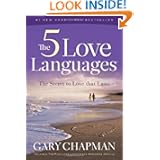
Title: The Five Love Languages
Author: Gary Chapman
Author: Gary Chapman
Publisher: Northfield Publishing
Year: 1992
How I found it: Heard about it from a friend.
Available on Amazon - Click on title link above
Audience: Married Couples (of course it has application for pre-married, post-married folks, too.)
Paperback, 191 pages
"WARNING: Understanding the five love languages and learning to speak the primary love language of your spouse may radically affect his or her behavior. People behave differently when their emotional love tank is full." p.24
Book Description:
"Marriage should be based on love, right? But does it seem as though you and your spouse are speaking two different languages? New York Times bestselling author Dr. Gary Chapman guides couples in identifying, understanding, and speaking their spouse’s primary love language—quality time, words of affirmation, gifts, acts of service, or physical touch.
By learning the five love languages, you and your spouse will discover your unique love languages and learn practical steps in truly loving each other. Chapters are categorized by love language for easy reference, and each one ends with specific, simple steps to express a specific language to your spouse and guide your marriage in the right direction. A newly designed love languages assessment will help you understand and strengthen your relationship. You can build a lasting, loving marriage together."
The Gist & What I appreciate:
We all have a primary love language (one of five). We need to learn our spouse's language and choose to speak it--if we want to 'keep the love alive.' Those five languages are: Words of Affirmation, Quality Time, Receiving Gifts, Acts of Service, Physical Touch.
Gary Chapman speaks from years of research and practical experience. He distills this into easily digestible chapters that have direct application to everyday married life. I appreciate the concept that we learn and speak a love language and that we can't assume everyone 'speaks' as we do.
This takes some of the mystery, and exasperation, out of a relationship and replaces it with a satisfying, efficient way to show love.
Quote from Chapter Three, page 37:
"Where are the shooting stars, the balloons, the deep emotions? What about the spirit of anticipation, the twinkle in the eye, the electricity of a kiss, the excitement of --x? What about the emotional security of knowing that I am number one in his/her mind" That is what this book is all about. How do we meet each other's deep, emotional need to feel loved? If we can learn that and choose to do it, then the love we share will be exciting beyond anything we ever felt when we were infatuated."
Quote from Chapter Ten, page 181:
"Love is a choice. And either partner can start the process today.
My two cents:
What else can I say? READ the book!
Okay, maybe to add that I vote for a "Marriage Language Training Center" where husbands and wives can enroll in multi-language courses. I know we have a primary love language, but I can't help thinking that the more love languages we speak, the more fun and variety there is in a relationship!
I've also wondered if we have differing love language needs over the course of years, or if we can be shaped by different relationships?
Up Next:
Strangling Your Husband Is NOT an Option/Merrilee Boyack
(posted by Tamara)
Strangling Your Husband Is NOT an Option/Merrilee Boyack
( Dear FTC, because I know you care, I bough the book all by myself. )
Friday, September 21, 2012
Keeping Score?
I'm still working on my next marriage book review. In the meantime, enjoy this blog post by Dr. Karl A. Pillemer, Ph.D.
According to his research, if we plan to stay married for a lot of years (as in all of them), we need to throw out the scorecard! I couldn't agree more.
If you take the time to read his article, please tell me what you think.
"For long-term success, couples have to orient themselves to giving more than they get. Both individuals are contributing to a relationship, the benefits of which transcend immediate interests on a given day. What couples must avoid -- if they wish to remain together as long as the elders we interviewed -- is keeping score about who is getting more and who is getting less. This kind of economic attitude works with a vending machine: If I put in my dollar, I will get a candy bar of equal value. According to the oldest Americans, this definitely does not work in marriage." (emphasis added)
50/50 Marriage Myth
(posted by Tamara)
Subscribe to:
Posts (Atom)